Following failed bond referendum, Union sets $10.5 million SAVE hearing
School board holds work session to discuss infrastructure improvements
- Members of the Union school board along with Superintendent John Howard examine documents provided by Denovo Construction Solutions during a work session held on Wednesday, Jan. 14, 2026, in the board room in La Porte City. Pictured from left: President Ben Schemmel, Howard, board secretary Diane Roberts (obscured), and Director Amanda Sheffler. PHOTOS BY RUBY F. MCALLISTER
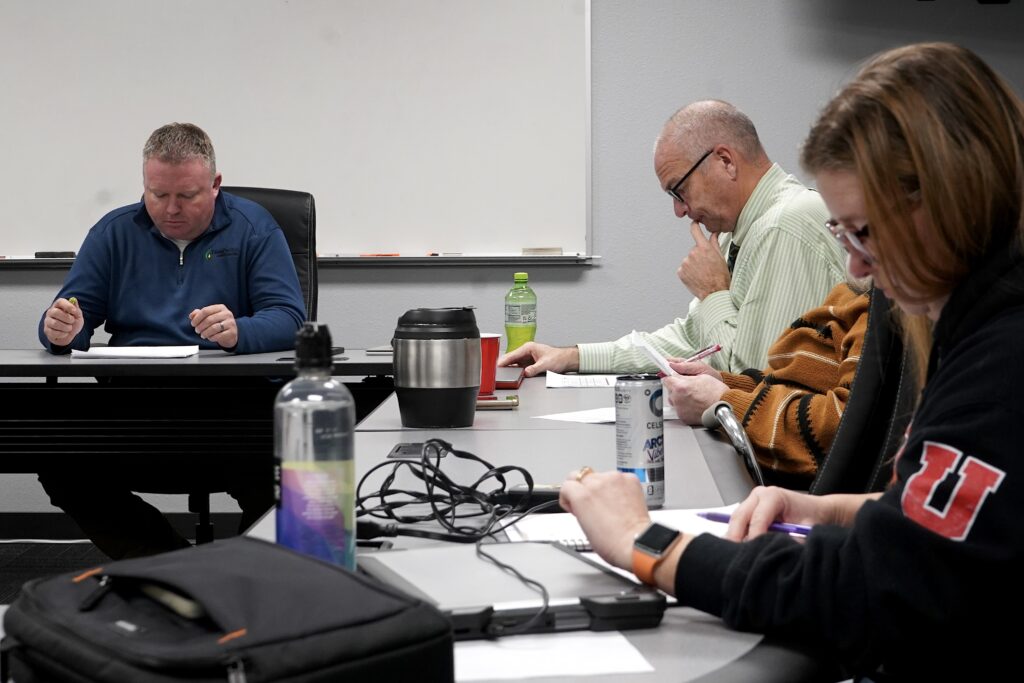
Members of the Union school board along with Superintendent John Howard examine documents provided by Denovo Construction Solutions during a work session held on Wednesday, Jan. 14, 2026, in the board room in La Porte City. Pictured from left: President Ben Schemmel, Howard, board secretary Diane Roberts (obscured), and Director Amanda Sheffler. PHOTOS BY RUBY F. MCALLISTER
LA PORTE CITY – The Union school board is hoping to move ahead with infrastructure improvements using future sales tax revenue following the failure this past November of the district’s second attempt at a bond referendum.
During the Monday, Jan. 19, regular monthly meeting, the board unanimously approved a resolution setting the date for a public hearing on the proposed issuance of roughly $10.5 million in school infrastructure sales, services and use tax revenue bonds – also known as ‘SAVE’ (Secure an Advanced Vision for Education) revenue. Such revenue is generated from statewide sales tax and is distributed annually by the Iowa Department of Revenue to school districts on a per pupil basis based on enrollment. In advance of last November’s $18.5 million bond referendum – which failed to pass by roughly 75 votes – Union Superintendent John Howard wrote in an April 2025 memo to the community that the district receives “approximately $900,000 annually” from SAVE.
“By law,” Howard further wrote, “these funds can only be used for infrastructure projects such as building and grounds improvements, construction or remodeling of buildings, major equipment purchases (including technology and transportation), and school safety equipment. Best practices recommended by state educational organizations suggest reserving a significant portion of these funds annually for emergency situations.”
With the adoption of the resolution Monday night, the district is hoping to borrow against future SAVE monies in order to pay off what remains from similar SAVE bonds issued back in 2017 while also funding approximately $8.7 million in new facility improvements. The resolution also rescinds a similar resolution adopted in August 2024 in advance of the November 2024 bond referendum – a $20.5 million referendum that failed by roughly six votes.
The new resolution approved Monday night specifically states SAVE revenue could be used to “remodel, repair, improve, and equip existing school buildings, including HVAC, electrical, roofing, interior finishes, and site improvements.”
‘It’s a riveting list’
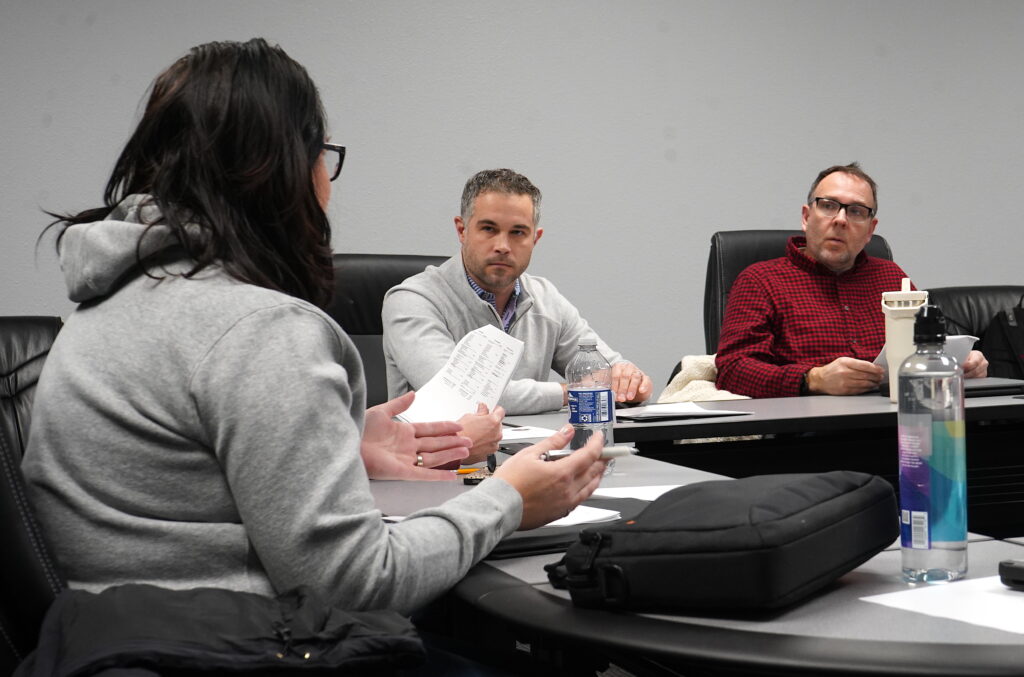
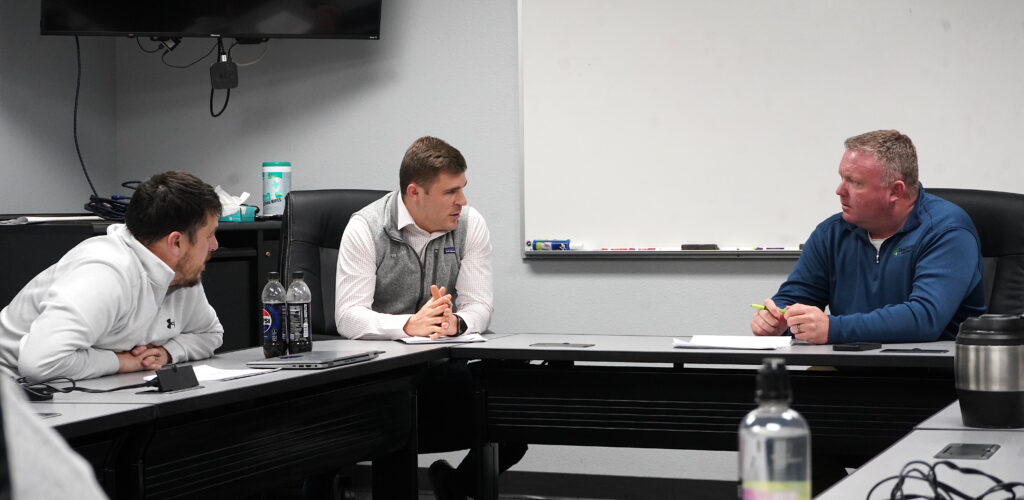
During a board work session held the previous Wednesday, Jan. 14, Patrick Davis with Denovo Construction Solutions provided the board with a packet detailing what board president Ben Schemmel referred to as “absolutely necessary” facility improvements. Such improvements would take place at all four school buildings in the district, to varying degrees.
The largest use of the SAVE revenue would be at the high school in order to move the building off the steam boiler system, Davis explained.
“In my opinion, the most pressing thing is the high school HVAC and just the system here in general,” he said before later summarizing: “The overall scope was reduced pretty considerably (from the bond referendum) down to this is what we absolutely have to do in each one of the areas to get it off that steam boiler system and keep the areas operating independently. So at the end of the project, you will have an updated HVAC system that does heat, does cool, and does ventilate. And this is about as, say, slim – concise – as we can make that project without having to do ceilings everywhere.”
Also at the high school, the project would include: work on the fire alarm system – similar work has already been completed at La Porte City Elementary and the middle school, while such work is ongoing at DG Elementary; some roof work; pavement work on both the south and north parking lots; and some general classroom interior improvements.
At the middle school, roof work would be the main project tackled with SAVE revenue, replacing some 49,500 square feet. HVAC work would also take place in order to move the building completely off the boiler system.
“You’re going to get rid of the boiler and boiler piping, add cabinet unit heaters and then add that rooftop unit to the gym which would activate heating and cooling in there,” Davis explained.
Interior improvements would also be addressed similar to the high school.
At DG, patching and repair work would be done to extend the useful life of the roof, Davis said, while both the gym and preschool room’s HVAC units would be replaced. Funds would also be budgeted to slowly replace classroom unit ventilators across the building.
At LPC Elementary, work on the roof and HVAC would take place (similar to DG) along with concrete repairs outside classroom exterior doors due to ‘stoop settling.’ The playground’s hard surfaces would be surfaced/resurfaced with an asphalt overlay.
Davis ended his presentation by summarizing the project as “a lot of HVAC, water, roofing, and just parking and pavement improvements.”
“I’m [estimating] 68.2% of the project – roughly $5.9 million – is just roofing and HVAC,” Schemmel responded before quipping, “It’s a riveting list.”
When asked about a timeline, Davis said the high school project alone would likely take two summers to complete (summer of 2026 and 2027).
Davis was then asked to compare work that would have been completed under the bond referendum to the current proposal.
“It’s just a different look at the project,” he replied. “There was more painting and flooring that was all encompassing (with the bond referendum). [With this project], we’re doing what we need to do to update the HVAC, get your fire alarm in place, and that’s basically it on the inside. We’re not touching the learning environments, we’re just touching the infrastructure to get it up to speed. … You’re not cutting any corners … you’re just not making it a larger renovation overall.”
“My thought was … [we’re doing] the things that need to be done so that the building doesn’t fall apart,” board vice president Brandon Paine added.
“Probably true,” Howard responded.
The board also discussed the decision not to fund at this time any ADA accessibility upgrades – something the bond referendum would have addressed.
“We did have the middle school bathrooms on here (as part of the project) and we could still do that,” Howard said. “We were under the assumption that we needed to stay at [$8.7 million]. … I personally would like to see the restrooms – especially at the middle school – be accessible. My personal opinion. And I think you could do it fairly well, fairly economically.”
SAVE monies
Following Davis’s presentation on Wednesday, Garrett Pochop with the financial firm Piper Sandler briefly addressed the district’s financial options in regard to SAVE revenue. According to Pochop, the district currently generates “around $1.2 million of sales tax revenues” based on an enrollment of “right around 915 students.”
“You’re getting around $1,357 per student. So that’s what’s generating the $1.2 million.”
Pochop also told the board borrowing $10 million against future SAVE revenue would be “leveraging around $730,000 of your current sales tax revenues … out through 2050.”
“It’s a large utilization of those [monies]. That’s where it’s going to be a determination of the importance of the projects, and do we feel like this is the appropriate project for those resources?”
He later clarified $730,000 (based on $10 million in new SAVE borrowing) would equate to roughly the total annual payment by the district, including both principal and interest.
Bond 3.0
During the work session, the board very briefly touched on the possibility of a future bond referendum which, if pursued, would mark the district’s third try at passage.
“Are we going to talk about trying another bond?” Director Lindsay Pipho asked toward the end of the session. “Or is that off the table?”
“It is for this year. For 2026, it’s off the table,” Schemmel replied.
“This is all great stuff but it doesn’t attract more students,” Director Reid Carlson said in reference to the difference between the SAVE project and the bigger project that would have taken place had the bond passed.
“Or keep the students you got,” Schemmel added.
“There’s nothing here that’s frivolous,” Davis later said in reference to the proposed project.
Public hearing set
As part of the resolution approved Monday night, the public hearing on the proposed issuance of approximately $10.5 million in SAVE revenue bonds was set for Monday, Feb. 16, 2026, at 6 p.m. in the high school board room as part of the regular monthly meeting.
Local News

Horticulture Judging Workshop offered Feb. 27

Traer Nostalgia: Photos from the Traer Historical Museum

Ryan Hosek named to BVU’s Fall 2025 Dean’s List

Second Wilson Scholar experiences success in and out of the UNI business classroom

Supervisors discuss future of old middle school with STC superintendent