
On Nature: Migrating monarchs being studied with app assistance
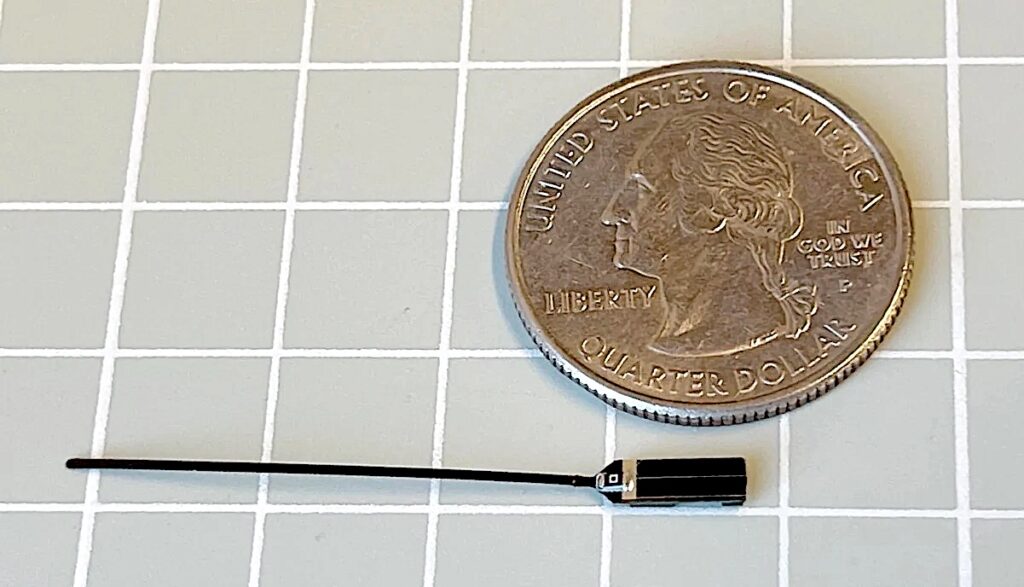
A photograph of the tiny transmitter being used to track migrating monarchs alongside a U.S. quarter. PHOTO COURTESY OF DAVID VOIGTS
Most of us are familiar with the orange monarch butterflies and know that they migrate up to 2500 miles from their summer habitats to their overwintering site in the mountainous forests of southern Mexico. Less well known is that the number of monarchs on their wintering grounds has plummeted in the last few decades, although their numbers were up somewhat last year. Even less is known about what is causing the decline, but help may be on the way.
Cellular Tracking Technologies has developed an ultra-lightweight solar-powered transmitter that allows monarchs to be tracked during migration and at other times. The transmitters weigh about 60 milligrams – less than a grain of rice – and are glued to the backs of butterflies. Hundreds of monarchs have been tagged through a project organized by Project Monarch and other groups. The results have been impressive, and the routes taken by individual butterflies are being traced. For example, monarchs tagged in Manitoba and Ontario, Canada, had reached northern Mexico by mid-October. Carrying a transmitter seems to cause very little additional Monarch mortality, but this is being researched as well.
Migrating monarchs are detected by the Motus Wildlife Tracking System that records any tagged animal that passes within the 12-mile range of a receiver. However, in an exciting new development, monarchs now can be detected on a smart phone by anyone who downloads the app from Project Monarch. Although the range of detection is only about 100 yards, the large number of people scanning for monarchs have already compiled a huge database. The app shows this data and with a little manipulation, the paths used by individual butterflies can be shown.
Scientists at Iowa State are collaborating in this research. The tiny transmitters were tested on monarchs in the Christina Reiman Butterfly Wing. In addition, researchers at Iowa State and the Reiman Gardens are tracking monarchs raised indoors along with others raised outdoors to determine if there is a difference in their survival during the eight-week migration.
It is hoped that as more is learned about the paths taken by monarchs and their survival during migration, it will help guide monarch conservation actions in the future. This hope will be enhanced if more people get involved recording monarchs with their phones. Let’s do it.
David Voigts is a retired ecologist and the current Conservation Chair for the Prairie Rapids Audubon Society. He is a Tama County native, graduating from Dinsdale High School, and lives in rural Jesup on his wife’s family farm.
Local Columns

Heather’s Highlights: County Government and You, October 2026

Dengler Domain: Halloween

Dysart Chamber Community Connections: Holiday Traditions, Hometown Connections
Dengler Domain: Beef and Fuel Prices

Who Would Jesus Vote For?